
In Japanese tourism marketing, the "Big Three" have long been sushi-making, kimono-wearing, and the iconic samurai. We often assume these are the universal entry points for any international traveler.
However, our latest data from Kansai International Airport (KIX) reveals a massive gap in intent that challenges this one-size-fits-all approach.
When we looked at travelers from Africa and the Middle East, the preference for the Tea Ceremony didn't just lead, it dominated.
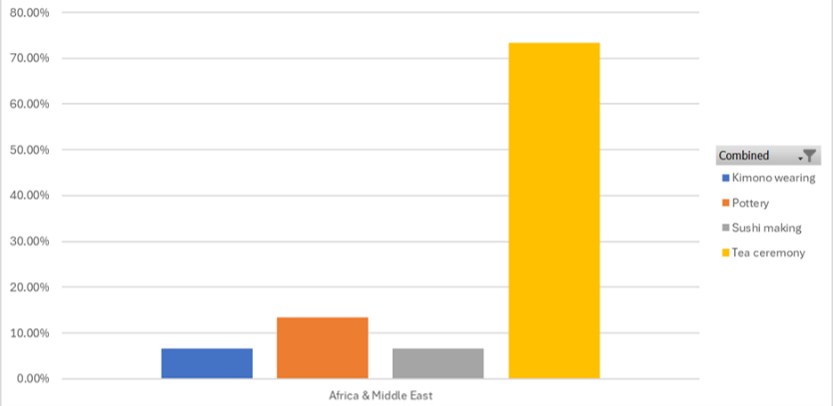
Why does the tea ceremony resonate seven times more than sushi-making or kimono-wearing for this segment? It likely comes down to cultural resonance. For visitors from regions with deep-rooted tea and coffee traditions, where the preparation is as important as the drink, the Japanese Chado (Way of Tea) feels familiar. It isn't a "costume" to put on or a "recipe" to follow; it’s a shared language of hospitality, respect, and mindfulness.
This data suggests that Japan’s global appeal is amplified when it moves beyond superficial attractions and taps into shared human values. For many travelers, the tea ceremony is more than an activity; it is a powerful experience of cultural symmetry. By honoring the sacred ritual of hospitality, Japan creates an authentic connection with visitors who value depth and tradition in their own lives.
To capture this high-intent segment, brands and destinations should:
- Prioritize "Shared Value" to highlight the cultural intersections that make Japanese traditions feel familiar and respected.
- It is essential to re-evaluate the "Big Three" approach, as data suggests that regional preferences often deviate from standard tourism staples.
- Deepening the experience is key; focusing on the substance of the ceremony ensures it resonates as a meaningful event rather than a simple photo opportunity.
When marketing traditional culture, do we focus too much on "trying something new" and not enough on "finding something familiar"?
Let’s discuss in the comments! 👇
Based on the Visitor Survey: Needs and Expectations for AI in Japan, conducted at Kansai International Airport in September 2025 (n = 273 international visitors), by Artyz Inc.